LinkedIn Marketing Strategy for B2B Founders
A practical playbook for founders who want to build a real pipeline from LinkedIn — without burning ten hours a week guessing what to post.
Why LinkedIn is the highest-leverage channel for B2B founders
LinkedIn is the only social platform where your buyer, their boss, and their boss's investor all scroll the same feed. For a B2B founder, that means a single post can reach the exact person who signs the contract — without ads, without a media budget, without a team.
The problem isn't reach. It's consistency at quality. Most founders post for three weeks, see flat numbers, and quit. The ones who win treat LinkedIn like a compounding asset: every post makes the next one easier to write and more likely to land.
The content compounding model
Content compounding is the engine behind every founder you see "blowing up" on LinkedIn. It works in three loops:
- Study what already works in your niche — not generic "viral" posts, but posts your buyer engaged with this month.
- Remix the structure, keep your voice. Use the proven hook + format, but plug in your story, your data, your opinion.
- Measure, double down, retire. Kill the topics that flop. Re-post the winners in a new angle 30 days later.
Every cycle, your "what to post" decision gets cheaper and your hit rate climbs.
Step 1 — Pick 3 to 5 competitors worth studying
Forget influencer leaderboards. The competitors that matter are the ones your buyer follows: other founders in your category, the loudest practitioners at companies you'd lose a deal to, and the consultants who teach what you sell.
Five is the sweet spot. Fewer and you run out of signal; more and you drown. Tools like RockitRank pull their last 90 days of posts into one library so you can sort by engagement and spot patterns in minutes.
Step 2 — Reverse-engineer the formats, not the words
What you're looking for in each top-performing post:
- The hook line. First 1–2 lines that earn the "see more" click.
- The structure. Story? Listicle? Contrarian take? Frameworks-and-screenshots?
- The payoff. What does the reader walk away with?
- The CTA. Comment bait, DM trigger, soft pitch, or none at all.
Copying words is plagiarism. Copying structure is strategy.
Step 3 — Build a 4-post weekly rhythm
- Monday — Insight. A contrarian take or data point from your work.
- Wednesday — Story. A specific moment from a customer call, launch, or failure.
- Friday — Tactical. A how-to your buyer can use this weekend.
- Sunday — Reflection. Short, personal, founder-voice.
Step 4 — Measure what actually predicts pipeline
- Profile views from your ICP.
- Inbound DMs that mention a specific post.
- Comments from decision-makers (titles matter more than counts).
- Demo requests that cite "saw your post" in the form.
The 30-day starter plan
- Days 1–3: Pick 5 competitors. Pull their top 20 posts.
- Days 4–7: Tag each post by hook, format, and topic.
- Days 8–30: Ship 4 posts a week using those patterns.
Day 60 is when inbound starts. Day 90 is when LinkedIn becomes a channel.
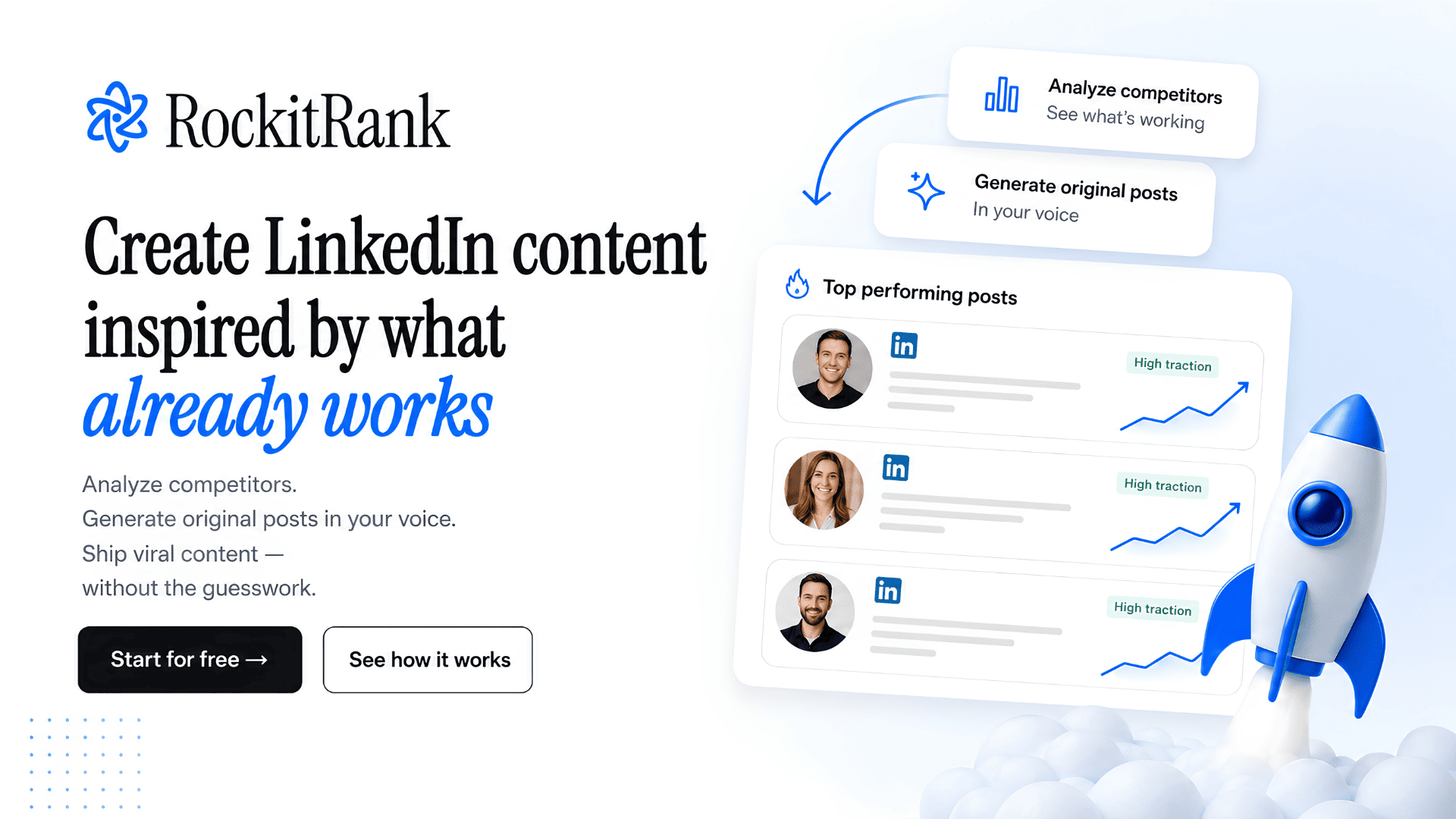
Skip the manual research
RockitRank pulls competitor posts, tags the patterns, and drafts in your voice — so you spend time shipping, not scrolling.
Start your 3-day free trial →